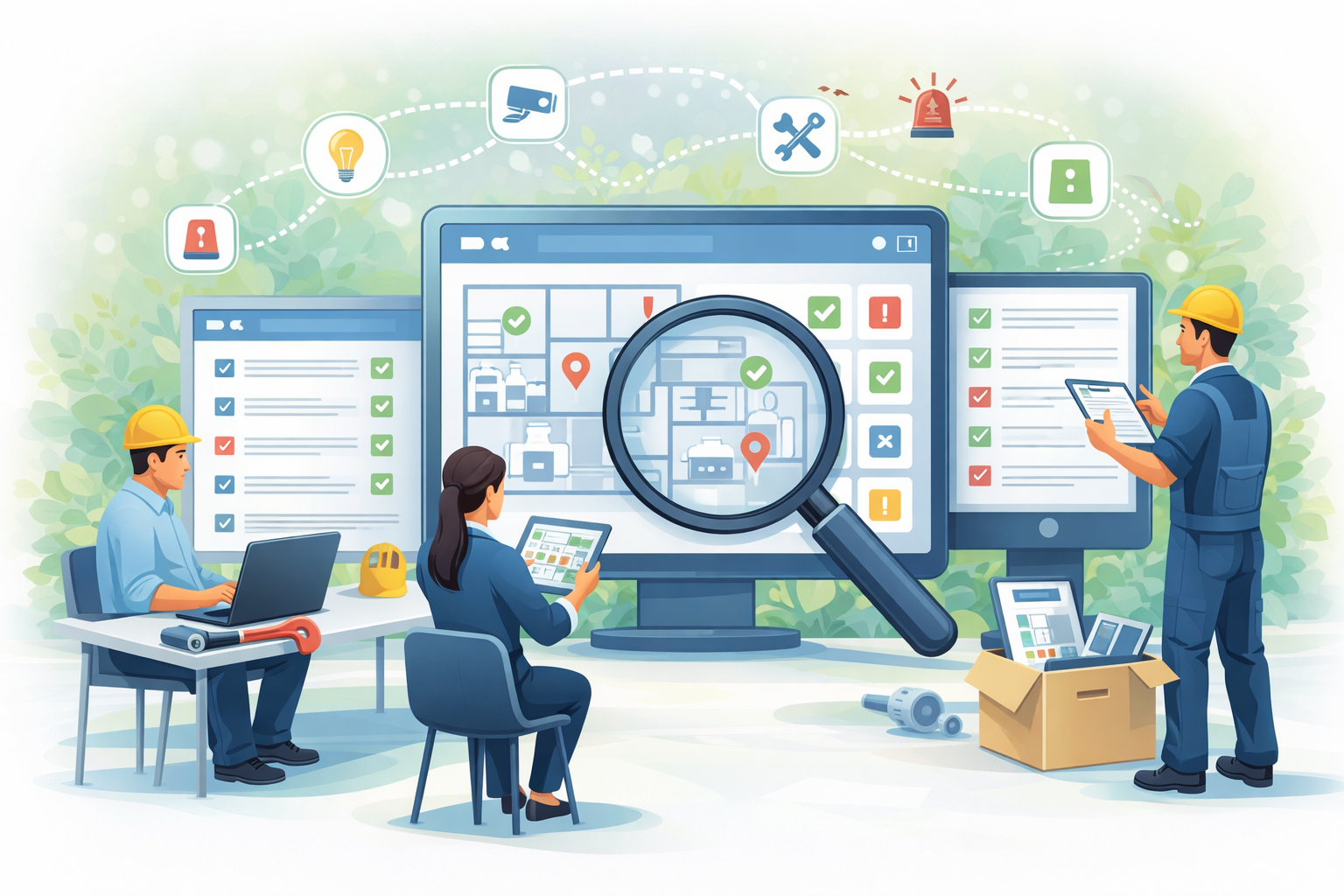
Managing facilities assets across multiple sites, buildings and teams is no small task.
From tools and equipment to maintenance assets and shared resources, items are constantly being moved, used, inspected and serviced. But when this information is stored in spreadsheets or scattered systems, it quickly becomes difficult to maintain control.
And that’s where inefficiencies begin.
The Problem with Manual Asset Tracking
Many facilities teams still rely on spreadsheets, paper logs or disconnected systems to manage their assets. While this may seem manageable at first, it often leads to:
-
Unclear asset locations
-
Lost or misplaced equipment
-
Missed maintenance or inspections
-
Time wasted searching for information
-
Difficult audits and compliance checks
When you can’t quickly answer questions like “Where is this asset?” or “When was it last serviced?”, operations start to slow down.
Why Facilities Visibility Matters
Facilities management is all about keeping operations running smoothly across every site.
Without clear visibility of assets, even small issues can lead to:
-
Increased downtime
-
Delayed maintenance
-
Compliance risks
-
Unexpected costs
-
Reduced efficiency across teams
Having accurate, up-to-date information is essential for staying ahead of issues and maintaining high standards.
A Smarter Way to Manage Facilities Assets
Modern asset tracking software replaces manual processes with a structured, centralised system.
Instead of scattered records, everything is stored in one place, including:
-
Asset locations and movement history
-
Maintenance, servicing and inspection records
-
User or team accountability
-
Audit logs and compliance data
-
Full lifecycle tracking
This creates a single source of truth for facilities operations.
Key Features That Make the Difference
A strong facilities asset tracking system should simplify day-to-day workflows and improve accuracy.
1. Location Tracking
Know exactly where each asset is, across sites, buildings, rooms and operational areas.
2. Asset Accountability
Track who is using equipment and when it was issued or returned.
3. Maintenance and Inspection Records
Keep servicing, repairs and inspection history attached to each asset.
4. Barcode and QR Code Workflows
Speed up check-outs, returns and audits by scanning assets instead of manually updating records.
5. Mobile Access
Allow teams to update asset information on-site, wherever work is happening.
The Impact on Facilities Operations
When facilities teams move to a structured asset tracking system, the benefits are immediate:
-
Better visibility across all sites
-
Fewer lost or unaccounted-for assets
-
Improved maintenance planning
-
Faster audits and inspections
-
Stronger accountability across teams and contractors
It also reduces manual admin, allowing teams to focus on maintaining and improving operations.
Getting Started Is Simple
Improving facilities asset tracking doesn’t need to be complicated. A simple rollout can look like this:
-
Record all assets in one system
-
Organise them by site, building or area
-
Track movement, usage and maintenance
-
Maintain records and generate reports
With the right setup, facilities teams can quickly move away from spreadsheets and gain full control over their assets.
Final Thoughts
Facilities asset tracking is a key part of keeping operations efficient, compliant and cost-effective.
By replacing manual processes with a structured system, teams can improve visibility, reduce downtime and stay fully in control of their equipment and resources.
If your team is still relying on spreadsheets or paper logs, now is the time to take a more modern approach.