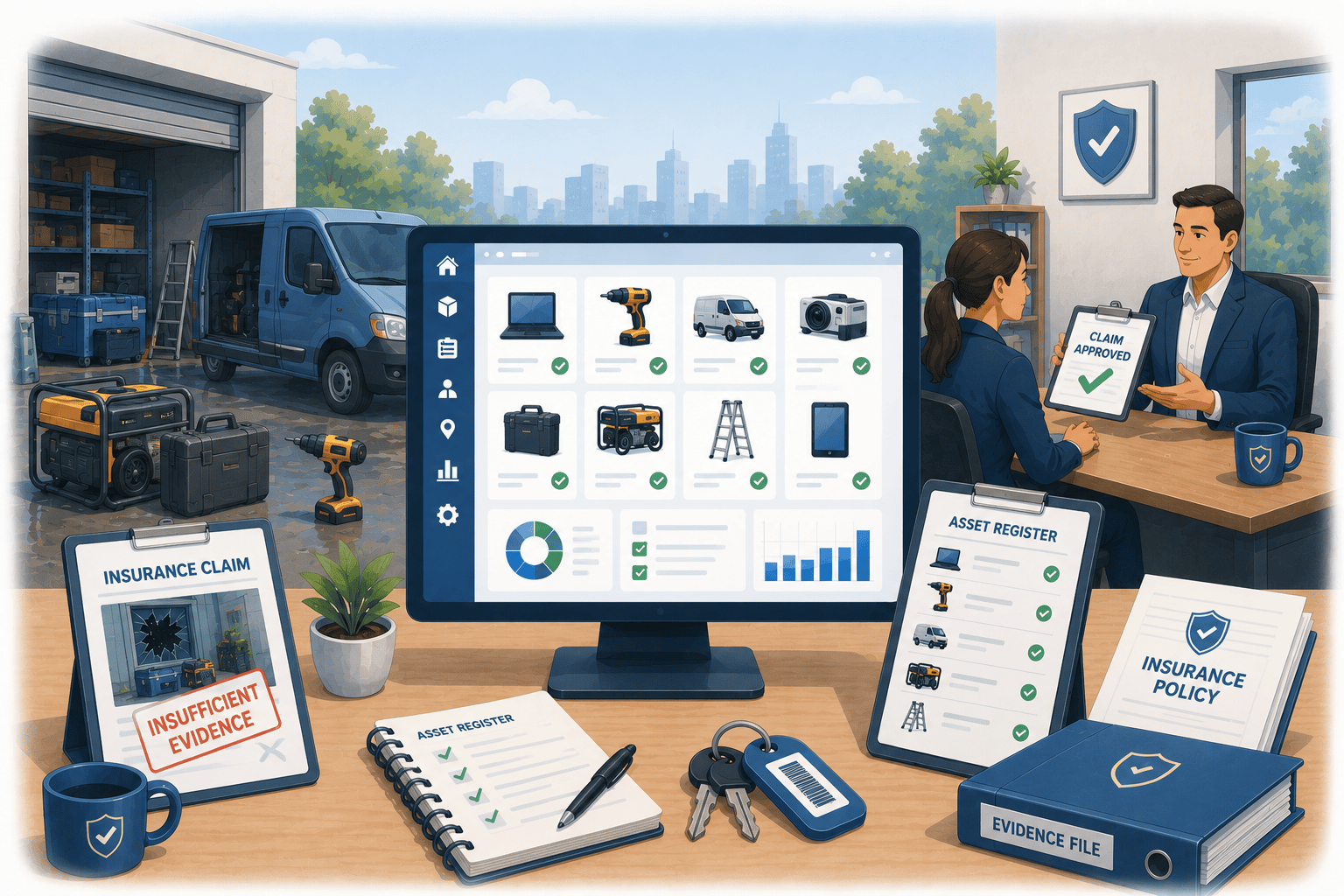
Most businesses think about insurance when they take out a policy or when renewal comes around. They rarely think about it in relation to how they track their assets. Not until something goes wrong and a claim needs to be made.
At that point, the quality of your asset records becomes very important very quickly. Insurers need to know what was lost or damaged, when it was purchased, what it was worth, and in some cases who had it last. If you can't answer those questions clearly, your claim gets complicated, or worse, disputed.
The gap most businesses don't notice
A surprising number of businesses carry significant insurance cover on assets they couldn't fully account for if asked. Equipment gets added over time without a central record being updated. Assets get moved between sites or departments without any documentation. Things get written off informally, taken home, disposed of, lost, and the register never reflects it.
The result is an asset register that doesn't match reality. That's a problem at audit time, and it's a much bigger problem when you're trying to make a claim for stolen or damaged equipment and the evidence of what you owned is thin.
What insurers actually want to see
When a claim is submitted, insurers typically want a clear record of the asset: what it is, its value, when it was acquired, and its condition. For higher-value equipment, a timestamped history of where it's been and who's been responsible for it can also be relevant, particularly if the claim involves theft or negligence.
A proper asset management system gives you all of that as a matter of course. Every asset has a record. Every movement is logged. Every check-in and check-out is timestamped and attributed to a user. That kind of audit-ready activity log isn't just useful for day-to-day operations. It's exactly what you need to support a claim quickly and confidently.
It also helps you insure the right things
An accurate asset register doesn't just help when claims are made. It also helps you make sure you're insured correctly in the first place. Over-insuring assets you no longer own wastes money. Under-insuring high-value equipment leaves you exposed.
When your register is kept up to date, renewals become straightforward. You know exactly what you have, what it's worth, and what needs to be covered. That's a much better position to be in than trying to piece together an accurate picture once a year when the renewal reminder lands.
High-value and specialist equipment
For businesses that manage high-value or specialist equipment, whether that's IT hardware, security systems, vehicles, or industry-specific tools, the stakes are higher still. Losing an expensive piece of kit without a proper record to back up a claim can mean the difference between a full payout and a protracted dispute.
Tracking those assets properly, with a full history attached, is a straightforward way to protect what you've invested in. Our IT asset tracking and security asset management pages cover how this works in practice for teams managing those specific asset types.
Don't wait until you need to make a claim
The time to get your asset records in order isn't when something has already gone wrong. It's now, while everything is in front of you and the process is manageable. A clean, up-to-date register makes claims easier, renewals more accurate, and audits less stressful across the board.
If your current records wouldn't hold up under scrutiny, our free asset tracking checklist is a good place to start. Or if you want to see what a proper system looks like in practice, book a free demo and we'll walk you through AssetControl.cloud. You can also view our pricing to see what's included.