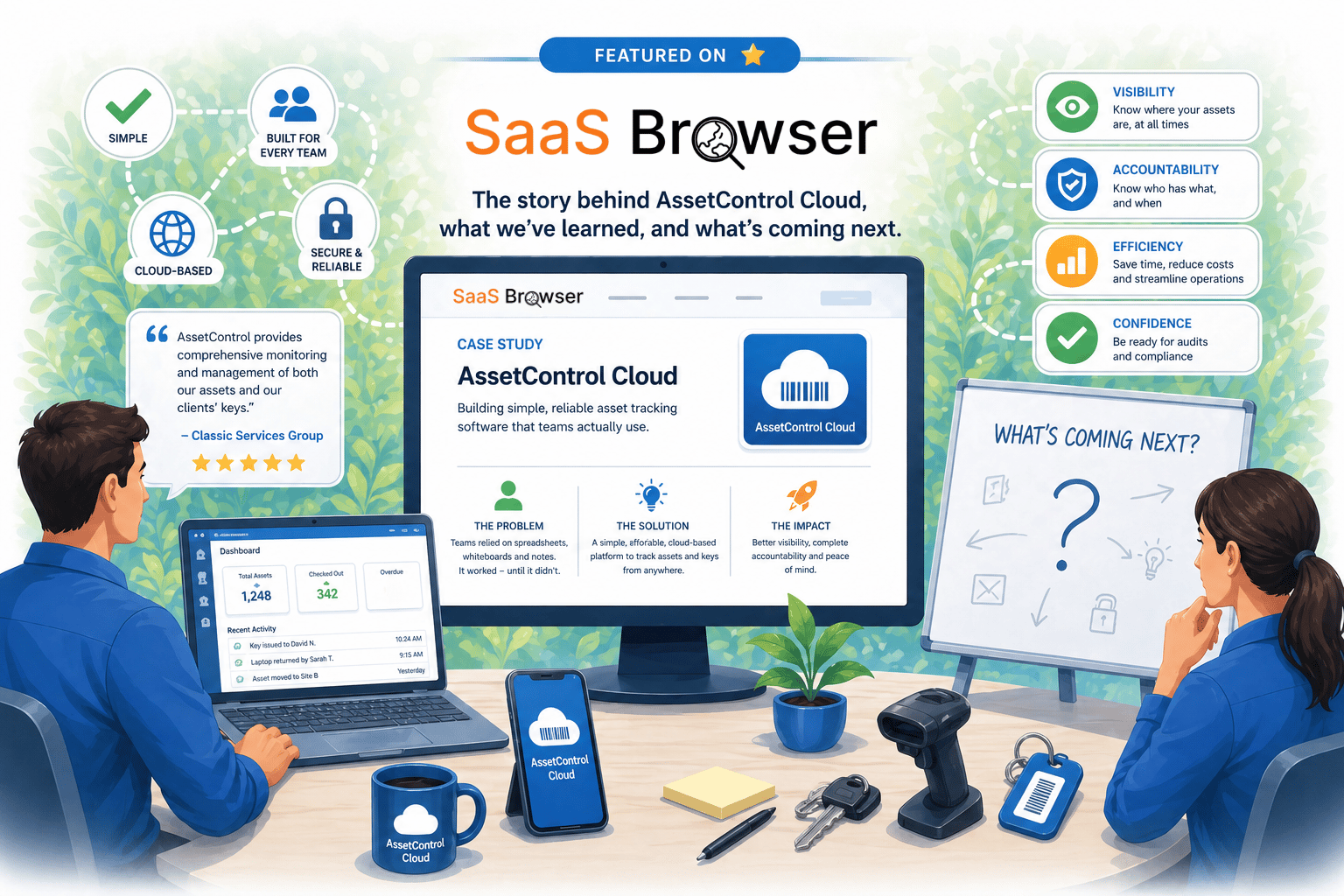
We're excited to share that AssetControl Cloud has been featured in a case study published by SaaS Browser - a platform that catalogues and profiles over 400,000 SaaS companies worldwide. The piece dives into the story behind AssetControl Cloud, how it came to be, and where it's headed.
If you haven't read it yet, here's a look at some of the highlights.
It Started with a Recurring Problem
AssetControl Cloud was built by Alex Bainbridge, a developer with a decade of experience in the key control and security industry. Working alongside businesses ranging from car dealerships to military organisations, he kept seeing the same thing: teams cobbling together spreadsheets, whiteboards, and handwritten notes to track their assets and keys.
It worked - until it didn't.
Items went missing. Audits became stressful. No one could say with confidence who had what, or when. The information that should have been instantly available was buried in disconnected systems or people's heads.
There were other solutions out there, but they were complicated to set up and difficult to justify at the price. So the goal was clear: build something simple, reliable, accessible from anywhere, and affordable for businesses of all sizes.
What Actually Drove Growth
The case study is refreshingly honest about what worked and what didn't in the early stages.
Direct conversations with potential customers - over phone calls and online demos - turned out to be the most effective growth tool. Showing people exactly how the software could work for their specific setup made the value tangible in a way that broad marketing campaigns never could. It also surfaced real feedback that shaped the product.
What flopped? Generic, wide-net campaigns. Trying to speak to every industry at once with the same message ended up resonating with no one. The shift to focused, specific outreach made a real difference.
Accountability Is the Point
One of the most interesting sections of the case study is Alex's take on what people fundamentally misunderstand about this kind of software.
Asset tracking isn't just about knowing where things are. It's about knowing who has them, when they took them, and being able to prove it. When something goes missing or an audit happens, "roughly tracked" simply isn't good enough.
That gap - between basic inventory and real accountability - is exactly what AssetControl Cloud is designed to fill. Trusted audit trails aren't a nice-to-have; they're often a compliance and risk issue.
The team at Classic Services Group put it well in their testimonial included in the case study:
"AssetControl provides comprehensive monitoring and management of both our assets and our clients' keys. The system is user-friendly, straightforward to configure, and delivers valuable insight by allowing us to track the location and status of our assets at all times."
What's Coming Next
The roadmap is focused on making AssetControl Cloud feel less like a separate system to check and more like a natural part of a team's daily workflow.
That means real-time alerts delivered directly into Slack and Microsoft Teams, so users get notified about overdue assets, key activity, or upcoming maintenance without having to log in. It also means deeper integration with Microsoft Intune, bridging the gap between physical asset tracking and IT device management.
The goal is simple: reduce friction, increase visibility, and let asset management run quietly in the background.
Read the Full Case Study
The full piece covers Alex's background, the biggest lessons learned building the product, tech stack details, and more. Read it on SaaS Browser here.
If you want to see what AssetControl Cloud can do for your team, Book a Demo - no lengthy setup required.