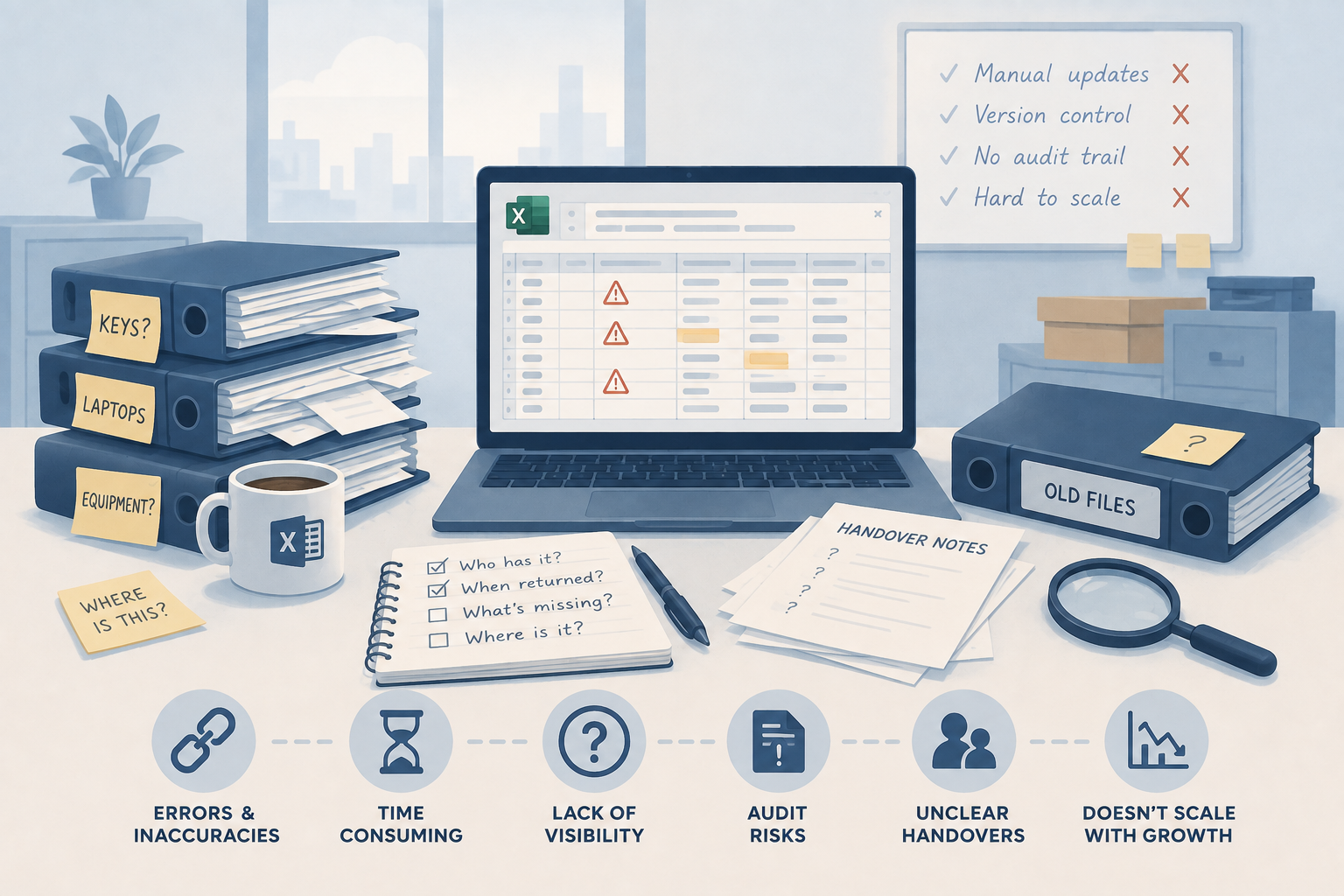
The Spreadsheet Is Lying to You: Why Manual Key and Asset Tracking Breaks Down
A spreadsheet feels free until it costs you an audit, a missing asset, or an unclear handover. Here's why manual tracking breaks down at scale, and wh...
Read articleSoftware asset management explainer
Cloud based software asset management (SAM) helps organisations control software licences, SaaS subscriptions, entitlements, installations and usage. It is a distinct discipline from using cloud software to track physical assets such as laptops, tools, equipment and keys.
The short answer
Choose a dedicated SAM platform when the main requirement is software discovery, licence reconciliation, subscription optimisation or vendor compliance. Choose physical asset management software when the priority is equipment custody, location, checkouts, returns and servicing. Some organisations need both systems, connected by consistent device and user identifiers.
How this guide was prepared: This guide distinguishes two commonly confused software categories. AssetControl Cloud manages physical assets and physical keys; it is not presented as a software-discovery or licence-reconciliation platform.
At a glance
Compare the approaches, then use the guidance below to decide what fits your operation.
| Decision factor | Cloud-based SAM | Physical asset management |
|---|---|---|
| Records managed | Software titles, contracts, licences, subscriptions, entitlements, installations and usage. | Equipment, devices, tools, keys, locations, holders, condition and service history. |
| Primary question | Are software rights, deployments and subscription costs compliant and optimised? | Who has the physical item, where does it belong and when is it due back? |
| Data collection | May use discovery agents, device-management integrations, SaaS connectors and purchasing data. | Uses asset registers, labels, QR or barcode scans, checkouts, handovers and user updates. |
| Lifecycle focus | Request, purchase, entitlement, deployment, use, renewal and retirement. | Receipt, assignment, movement, maintenance, return, audit and disposal. |
| Risk controlled | Overspend, unused subscriptions, licence shortfalls and contractual non-compliance. | Loss, uncertain custody, missed servicing, unavailable equipment and incomplete audit history. |
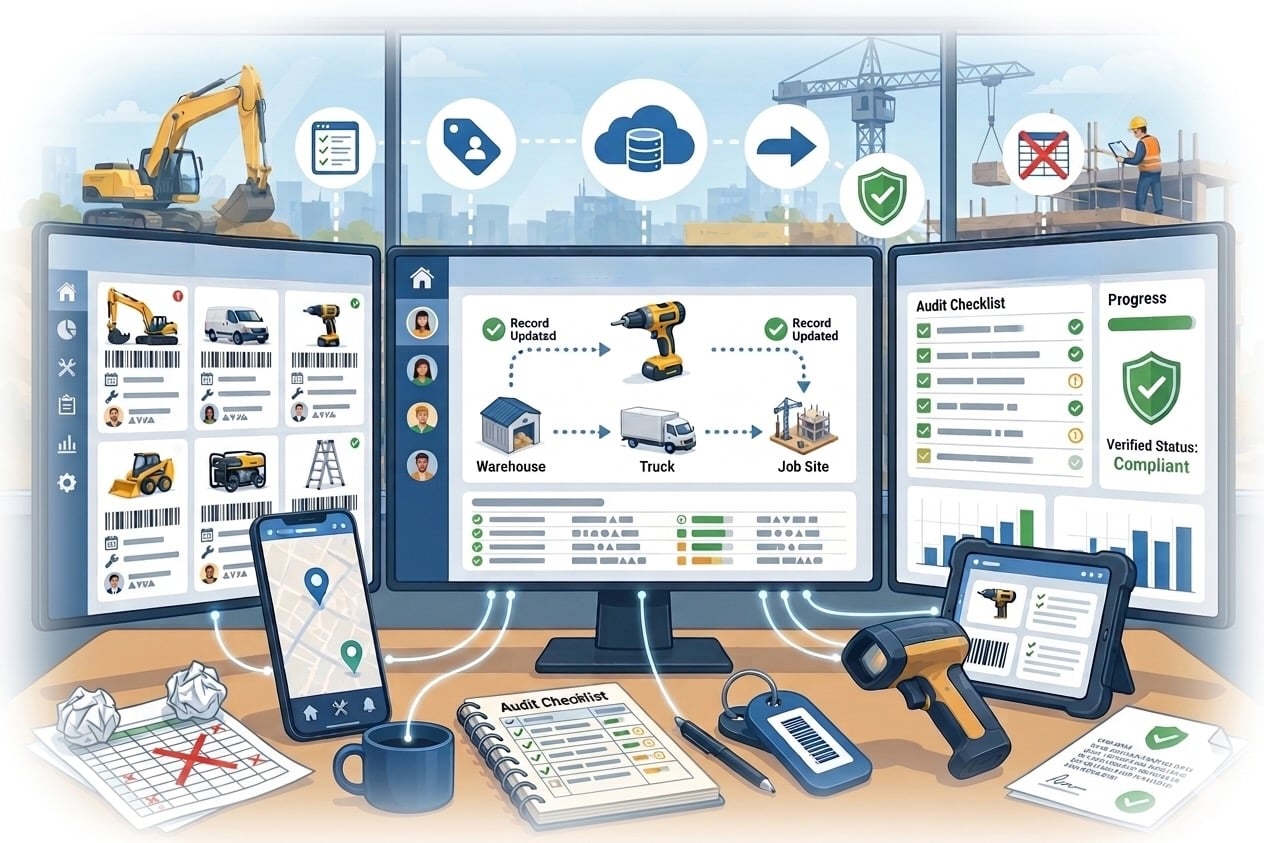
| AssetControl Cloud fit | Not designed for automated software discovery or licence reconciliation. | Designed for accountable physical equipment and key workflows across people and sites. |
Software Asset Management is the practice of managing software throughout its commercial and operational lifecycle. A cloud-based SAM platform provides a shared online view of what software an organisation is entitled to use, what is deployed or subscribed to, who uses it and what it costs.
The strongest platforms do more than hold a list. They bring together contracts, purchase records, licence rules, discovered installations, SaaS accounts and usage evidence so teams can identify unused subscriptions, prepare for renewals and respond to vendor audits. The exact capability depends on the product and the data sources it can connect to.
Software Asset Management concentrates on intangible software rights and consumption. IT Asset Management is broader and can cover hardware, software and associated financial or lifecycle records. Physical asset tracking concentrates on real items and their operational custody, location, condition and availability.
A laptop demonstrates the difference. A SAM system may identify applications installed on it and reconcile those installations against purchased rights. A physical asset system records the laptop’s asset tag, assigned user, office, checkout history, condition and repair activity. One device can therefore appear in both systems for different reasons.
Start with the publishers, licence models and SaaS services that create the greatest cost or compliance exposure. Confirm how the platform discovers software, imports entitlement evidence, normalises product names and applies licensing rules. A polished dashboard cannot compensate for incomplete discovery or unreliable contract data.
For subscription software, test how the platform identifies active users, dormant accounts, overlapping applications and renewal dates. Ask how it handles joiners, movers and leavers, because account ownership and access changes are central to controlling recurring cloud-software spend.
IT teams often need both perspectives. Software cost and compliance decisions depend on knowing which people and devices remain active, while operational teams need reliable custody and service records for the hardware itself. Shared device identifiers and user references can reduce manual reconciliation between the two processes.
Keep system ownership clear. The SAM platform should remain authoritative for licences, entitlements and measured software use. The physical asset platform should remain authoritative for equipment checkouts, holders, locations and maintenance. Decide which events need to pass between systems rather than attempting to make either product perform every task.
Write down the decisions the system must support before comparing vendors. If the desired outcome is fewer unused SaaS seats or a defensible licence position, evaluate dedicated SAM capabilities. If the outcome is fewer missing laptops, accountable handovers or clearer repair history, evaluate physical asset tracking workflows.
Use real data in a proof of concept: one complex software publisher, a SaaS renewal, a user departure and a sample of physical devices. Check data quality, exception handling, reporting, implementation effort and ongoing ownership. Select the category that solves the defined problem, then integrate adjacent records only where the operational benefit is clear.
A few useful answers
Clear answers to help you choose the right approach for your team.
From the blog