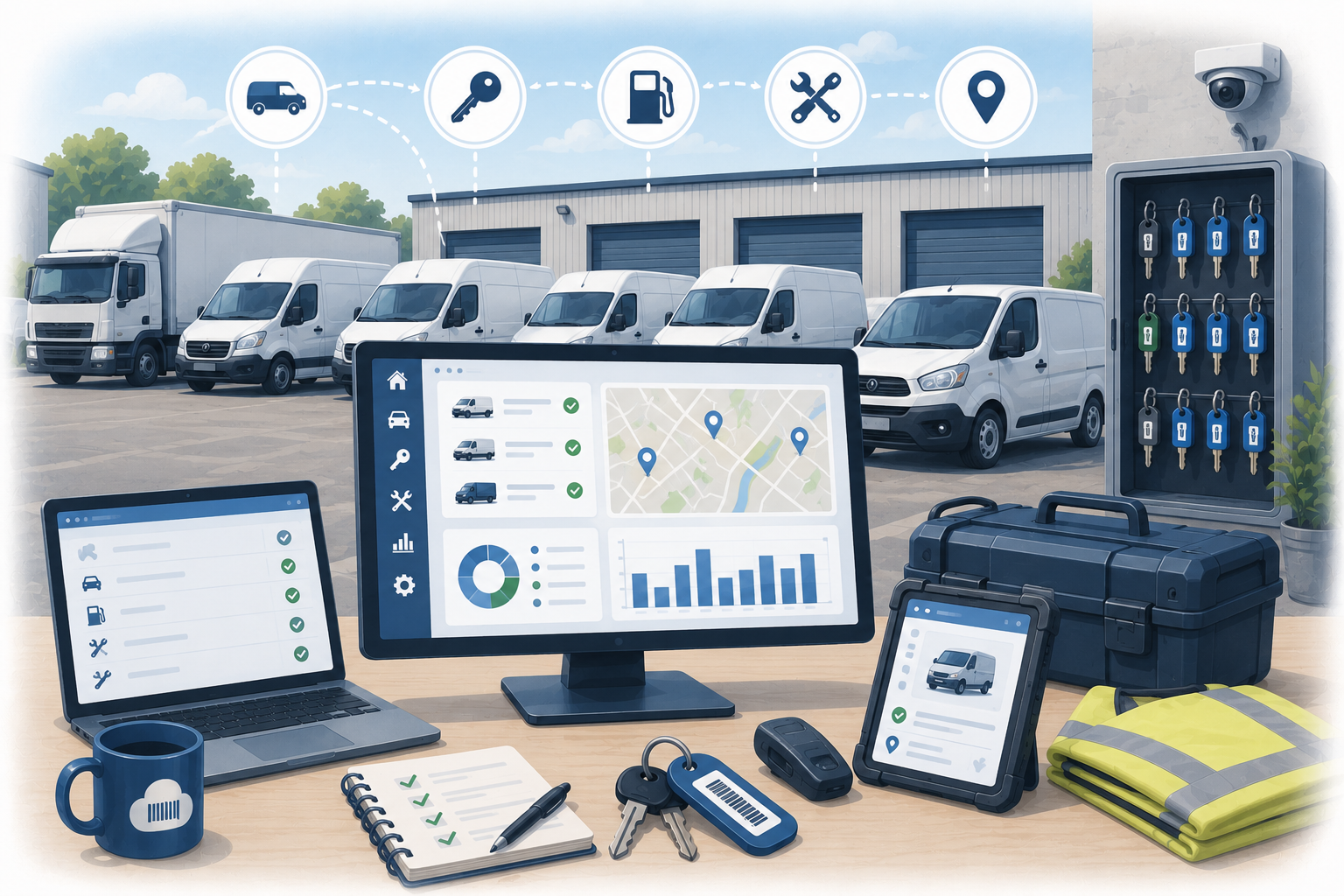
Running a fleet means keeping a lot of things moving at once. Vehicles need to be in the right place, drivers need to be briefed, and jobs need to go out on time. In that kind of environment, it's easy for the finer details — like which keys are where, or which equipment is loaded on which van — to slip through the cracks.
For a lot of transport and fleet businesses, those details only become a problem when something goes wrong. A driver turns up without the right equipment. A vehicle key can't be found at the start of a shift. A tool goes missing between jobs and nobody knows when it was last seen. By that point, the damage is already done.
Keys are often the first bottleneck
Fleet key management sounds simple — but it's one of the most common sources of delay in transport operations. When keys aren't tracked properly, they get left in the wrong place, taken home by mistake, or simply misplaced during a shift handover. Any of those things can hold up a vehicle and, by extension, everything that vehicle was supposed to be doing that day.
Having a clear record of which driver has which key, and when it was signed out, removes most of that uncertainty. If a key is missing, you know immediately who last had it and when — rather than spending twenty minutes asking around before a shift can start.
Equipment tracking matters just as much
Vehicles are the obvious asset to manage, but fleet businesses tend to carry a significant amount of additional equipment — tools, PPE, specialist kit, charging equipment, first aid supplies. That equipment moves with drivers, gets shared between vehicles, and needs to be in the right place for jobs to run properly.
Without a system for tracking it, you end up with equipment that's unaccounted for, replacements being ordered for things you already own, and no clear picture of what's actually on each vehicle. A proper asset register closes that gap and gives you visibility across everything, not just the vehicles themselves.
The handover problem
Shift handovers are where a lot of fleet businesses lose track of assets. One driver finishes, another starts, and somewhere in the middle a key doesn't get returned or a piece of equipment gets left in the wrong van. Over time, these small gaps compound into a much bigger inventory problem.
A digital check-in and check-out process makes handovers cleaner. There's a record of what was passed on, who received it, and when — so if something is missing at the end of a shift, it's straightforward to identify where it went rather than writing it off as lost.
Compliance and audit trails
Fleet businesses often operate in regulated environments where being able to demonstrate proper asset management matters. Whether that's a routine audit, an insurance claim, or a compliance check, having a clear and timestamped history of your assets — what you have, where it's been, and who's had it — is genuinely useful to have on hand.
That kind of record is difficult to maintain manually and easy to maintain with the right system in place.
A system that works across your operation
AssetControl.cloud gives fleet and transport businesses a central place to track keys, vehicles, and equipment — with a full log of every movement and a live view of what's currently where. It's accessible from any device, which means it works whether your team is in the depot or out on the road.
If you're managing a fleet and still relying on a whiteboard or a manual log, it's worth seeing what a proper system looks like.
Book a free demo at AssetControl.cloud.