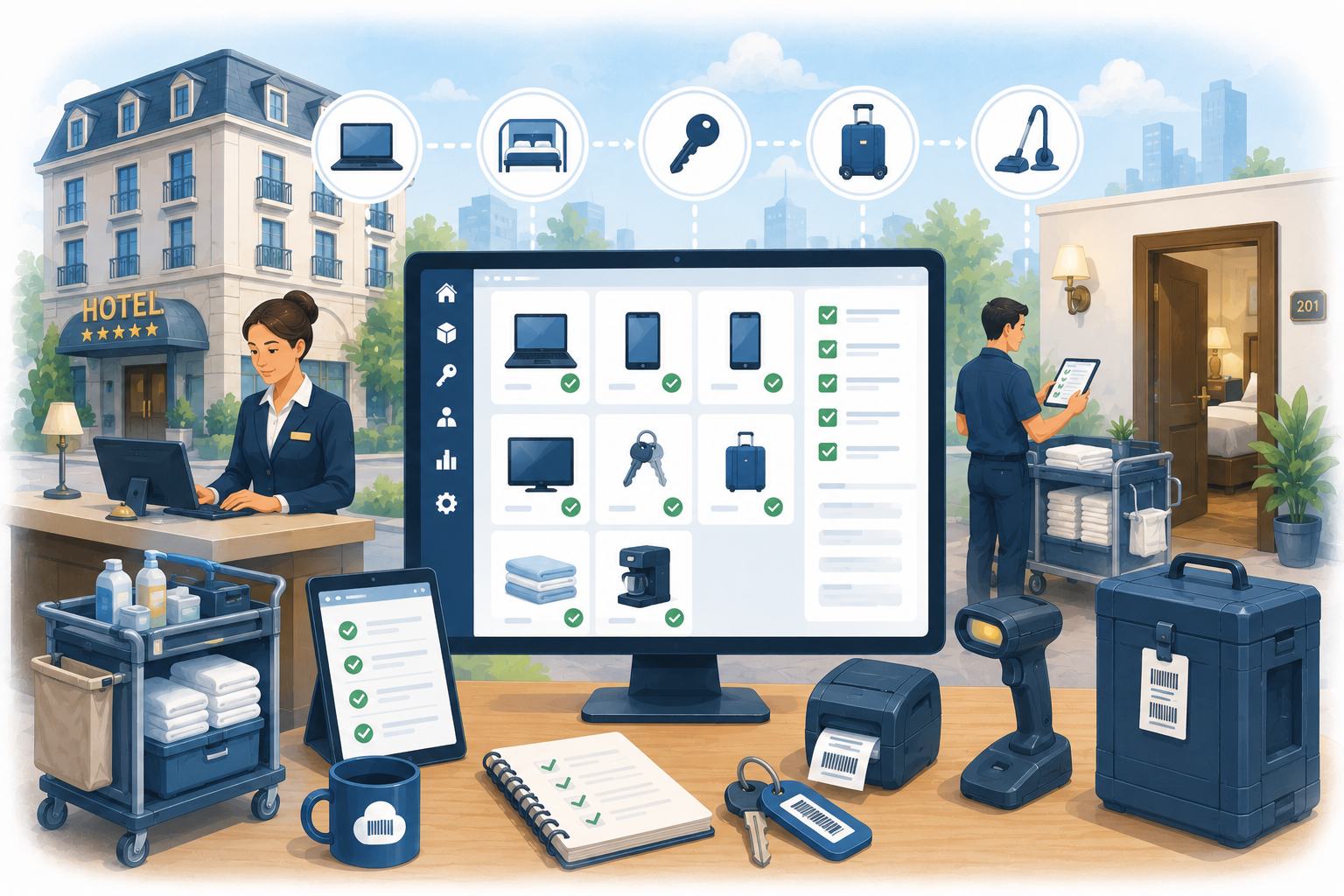
Hotels, venues, and event spaces are busy places. Staff change shift, guests check in and out, contractors come and go — and running through all of it is a constant flow of keys, equipment, and assets that need to be in the right place at the right time.
For a lot of hospitality businesses, keeping track of all that still comes down to a logbook at the front desk and a lot of trust. It works until something goes missing, a room key ends up unaccounted for, or a piece of equipment disappears between shifts.
The challenge is the pace
Most industries deal with assets moving around, but hospitality is different in how quickly things change hands. A key might be signed out by a housekeeper in the morning, passed to a maintenance team in the afternoon, and needed by a manager that evening — all without a clear record of where it's been in between.
Add seasonal staff, agency workers, and a high turnover rate into the mix, and the picture gets complicated fast. Manual systems just aren't designed to keep up with that kind of volume.
Keys are the obvious pressure point
Key management is where most hospitality businesses feel the strain first. Losing a master key or a room key isn't just inconvenient — it's a security issue that can mean replacing locks, reprinting key cards, and notifying guests. The cost of that, both financially and in terms of reputation, is significant.
Knowing exactly who has which key at any given time, and having a full history of where it's been, takes most of that risk off the table. If something does go wrong, you're not starting from scratch trying to piece together a timeline.
It's not just keys
Hospitality businesses carry a lot of equipment that's easy to lose track of — handheld radios, cleaning equipment, catering gear, AV kit for events. These things get moved between rooms, borrowed between departments, and left in the wrong place regularly. Without a system for tracking them, you end up with gaps in your inventory that nobody notices until something's urgently needed and nowhere to be found.
A clear asset register — one that's updated as things move — means you always know what you have and where it is. That's genuinely useful on a daily basis, not just when something goes wrong
Why cloud-based tracking makes sense for hospitality
One of the specific challenges in hospitality is that asset tracking needs to work across different teams, different shifts, and sometimes different sites. A system that only works on one computer, or relies on someone remembering to update a sheet, isn't going to hold up in that environment.
Cloud-based tracking means anyone with the right access can see the current status of assets in real time — from the front desk, the back office, or on their phone. When a key is signed out, it's logged. When a piece of equipment moves between departments, there's a record. No chasing, no guessing.
Getting set up is easier than you'd think
AssetControl.cloud is designed to be straightforward to set up and easy for staff to use — which matters in an industry where training time is tight and team members need to get up to speed quickly.
You can be tracking keys, equipment, and assets from day one, with a full log of every movement and a clear view of what's currently where. If you're in hospitality and still relying on a manual system, it's worth seeing how much simpler things can be. Get started at AssetControl.cloud.